

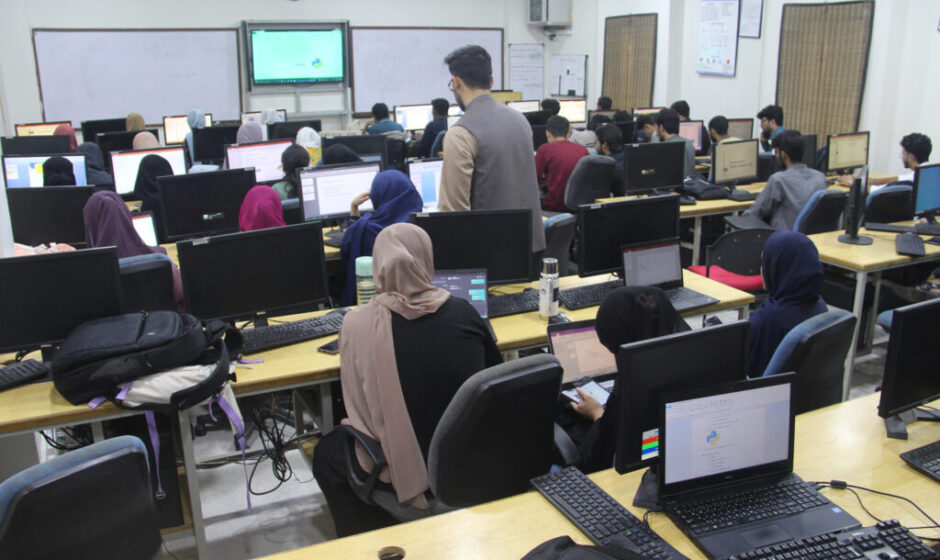

Pakistan digital talent is falling short of rising demand, according to a new World Bank report, which warns that the country skills ecosystem has not kept pace with the needs of its fast growing digital economy.
The report, titled Digital and AI Skills for Jobs in the Middle East, North Africa, Afghanistan and Pakistan, says industry demand has shifted decisively toward experienced, specialised and hyper specialised roles in artificial intelligence, cloud computing, cybersecurity, data engineering and platform engineering, and that is exactly where Pakistan talent pipeline remains weakest.
Pakistan is already deeply integrated into regional digital labour markets. Pakistanis account for 11.9 per cent of Saudi Arabia high skilled labour inflows, and Saudi Arabia received 62 per cent of all registered Pakistani overseas workers in 2024. Yet at home, many university curricula still emphasise foundational concepts with limited applied exposure to frontier technologies, while weak links between academia and industry leave substantial proportions of technology graduates without industry aligned employment in their first year after graduation.
Training Systems Lag Behind Demand
Responsibility for digital skills is spread across federal ministries, provincial governments, universities, vocational authorities and industry bodies. The report says that fragmented structure lacks a unified, industry validated framework capable of aligning training with real time labour market demand.
Persistent equity gaps compound the challenge. Women represent only 16 per cent of Coursera learners in Pakistan, compared with a global average of 43 per cent, the report says.
What The Report Recommends
The World Bank proposes a unified framework spanning curricula, training standards and certification systems across formal education, vocational training and workforce development programmes nationwide. Such a framework could strengthen digital and AI capacity among public sector schoolteachers and gradually integrate digital literacy into school curricula to close foundational gaps early.
Expanding proven internship programmes tied to employability outcomes and private sector demand would also ease the education to work transition, the report says, alongside embedding AI training within health, education and public administration and setting up centres of excellence in high growth subsectors to help the IT services industry move up the global value chain.
To narrow geographic and gender disparities, the report recommends expanding digital skills access nationwide, particularly in rural areas, through flexible delivery models tailored to local labour markets, especially for women and middle aged or ageing workers who need reskilling and upskilling. But it warns that the critical test will be whether implementation can move with the speed and coordination that the labour market requires, as the working age population across the region is projected to grow by about 220 million between 2025 and 2050, requiring as many as 100 million new jobs over two decades.