
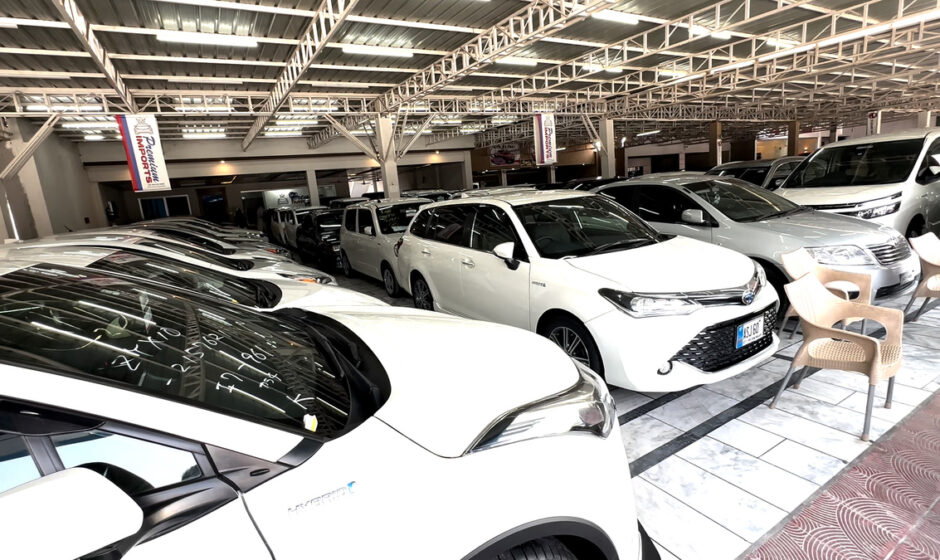

Car imports in Pakistan surged by 52 per cent year on year to $172 million in the first four months of the current fiscal year, as buyers kept purchasing new and used cars while the new auto policy remained delayed and unimplemented.
Imports of semi knocked down and completely knocked down kits by local assemblers also surged by 25 per cent year on year to $785 million during the same period. The total import bill for auto parts and accessories stood at $2.1 billion in the last fiscal year, compared with $1.1 billion the year before, while imports of new and used cars in the last fiscal year stood at $377 million, up 92 per cent over the preceding fiscal year.
Both categories of imports are putting pressure on the country fragile foreign exchange reserves and may be contributing to a widening current account deficit.
Chinese Models Drive The Import Bill
An auto parts manufacturer said sales of expensive Chinese vehicles were surging, requiring assemblers to import costly components such as seats, wiring harnesses, lights, glass and shock absorbers. He attributed the rising completely built up import bill to the arrival of a popular electric vehicle brand, which had sold more than 10,000 imported units, while another Chinese manufacturer had recorded sales of 15,000 units across two imported variants.
Just one Chinese manufacturer imported 1,500 vehicles a month, he said, while used car imports stood at 2,500 units a month, eroding the market share of established players.
Parts Makers Urge Policy Delay
Abdul Rahman Aizaz, chairman of the Pakistan Association of Automotive Parts and Accessories Manufacturers, said several letters had been written to the prime minister, but the association concerns remained unaddressed. He urged the government to defer implementation of the new auto policy until June 2027, arguing that it should prioritise localisation, protect local vendors and introduce rational tariffs to encourage domestic manufacturing.
He said Japanese cars assembled in Pakistan had achieved 50 to 65 per cent local content by value, compared with 20 to 25 per cent for Korean and just 0 to 5 per cent for Chinese vehicles. He criticised the reduction in general sales tax on plug in hybrid vehicles from 18 per cent to 9 per cent, asking why the government was benefiting the ultra rich instead of supporting locally manufactured vehicles and job creation, and proposed maintaining tariffs of at least 35 per cent on localised parts and 25 per cent on non localised components until the fourth year of the policy.
Sazgar Engineering Works has reduced prices of the plug in hybrid variants of the Haval H6 and Tank 500 by 4 to 17 per cent following the government announcement of the new energy vehicle policy, though the policy is yet to be formally notified, pending IMF and federal cabinet approval. Meanwhile DENZA has partnered with Mega Motor Company to introduce two luxury electrified SUVs, the B5 at Rs 35.99 million and the B8 in Dynamic and Premium variants at Rs 50.99 million and Rs 54.99 million.