

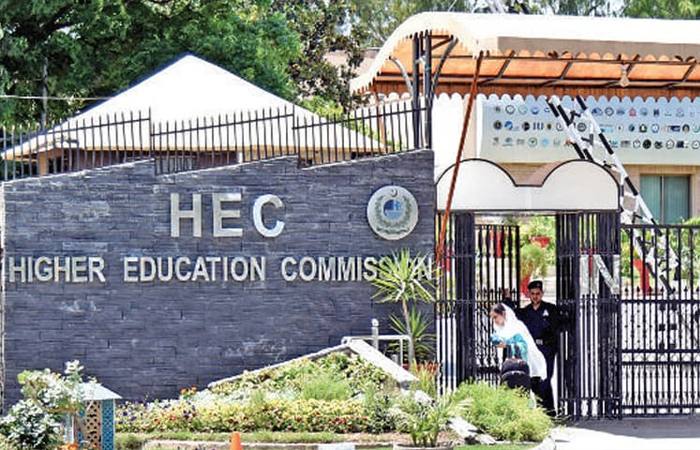

Pakistan's universities are getting an AI upgrade behind the scenes. The Higher Education Commission, through its National Academy of Higher Education, has launched a three day training programme on applied artificial intelligence for university administration, a first of its kind intervention aimed at modernizing how the country's higher education institutions are run.
The programme, held from October 7 to 9, is designed for university management officials in BPS 17, 18 and 19, including assistant and deputy registrars, controllers, treasurers and other administrative cadres. These are the people who keep universities functioning: admissions, examinations, records, finance. The training focuses on the practical, hands on application of AI tools to streamline exactly those functions, promising faster admissions processing, smarter examination management and cleaner record keeping.
The initiative is framed as a major step toward Digital Pakistan and cyber resilient higher education. That framing matters because university administration in Pakistan has long been a paper heavy, delay prone affair, where a simple transcript request can take weeks. If AI tools can genuinely compress those timelines, the benefit flows directly to students and faculty who currently absorb the cost of bureaucratic friction.
HEC has confirmed that similar trainings will follow at its regional centres in Lahore, Karachi, Peshawar and Quetta, signalling that this is a national rollout rather than a one off Islamabad event. Universities can nominate up to five officers each, with the top two nominations getting preference where seats are limited, a design that pushes institutions to send their most capable administrators first.
The programme is being seen as a timely effort to equip university administrators with future ready skills and to improve governance, transparency and service delivery across higher education. Technology alone never fixes institutions, but administrators who understand what AI can do are far better placed to demand better systems. For Pakistan's universities, that cultural shift may prove more valuable than any single tool.