
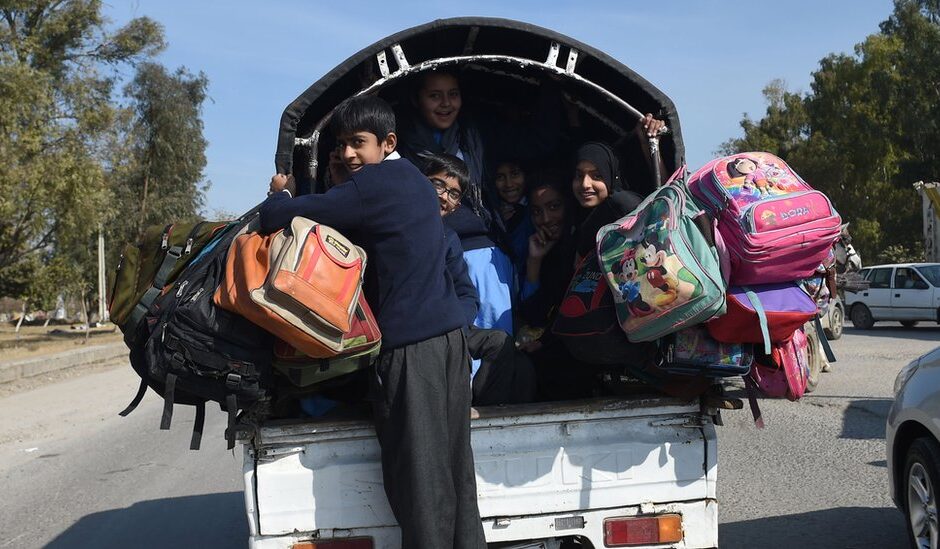

Punjab is planning to take the classroom to the children. The provincial government is developing Classroom on Wheels and Library on Wheels projects, mobile units designed to carry teaching and books to communities where schools are distant, overcrowded or simply absent.
The concept addresses one of Pakistan's most stubborn education challenges: the millions of out of school children for whom the nearest classroom is too far to reach daily. A bus fitted as a classroom, staffed by a teacher and stocked with learning materials, can serve multiple settlements in rotation, delivering foundational literacy and numeracy where no school building exists. The library variant extends the idea to reading culture, putting books directly into children's hands.
Mobile learning is not a substitute for the school system, and it should not be presented as one. What it can do is bridge the gap: enroll children informally, build basic skills, and create the demand and readiness that makes a future school viable. In that sense the wheels are a complement to brick and mortar expansion, reaching the last mile that construction budgets struggle to cover.
The success of such projects elsewhere has hinged on execution details: regular routes, trained staff, maintained vehicles and learning materials matched to the children's level. Announcements are easy; a bus that actually shows up every Tuesday is hard. The coming weeks will show whether the plan moves from proposal to pilot with the operational seriousness it needs.
For Punjab's education planners, the projects also signal a welcome pragmatism. Not every learning problem needs a building. Sometimes it needs a bus, a teacher and a shelf of books, showing up on schedule.